


Blog
Italy Wine Region (Part 1)
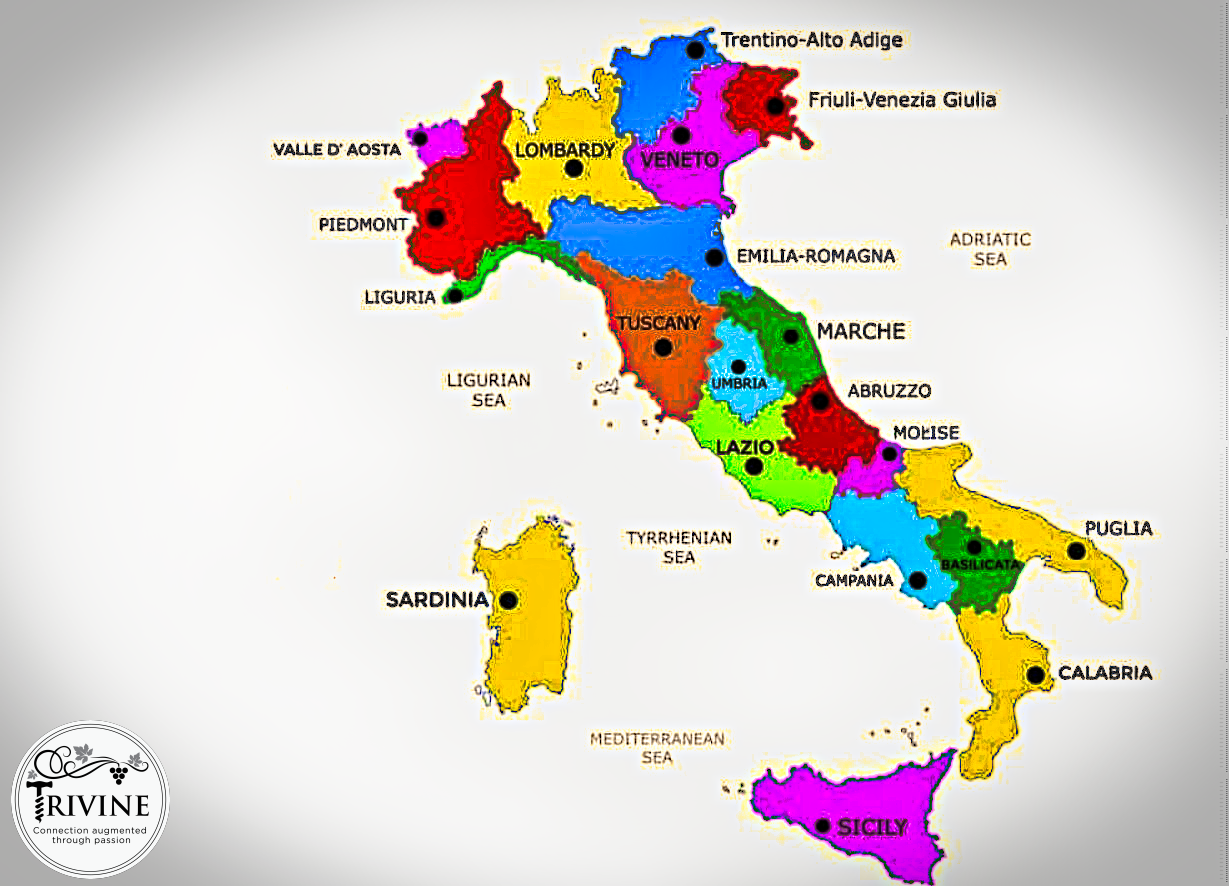
Valle d'Aosta
Aosta Valley lies in the Northwest of Italy. It is the country’s smallest winemaking region with the highest overall elevation.
In Valdigne, the northernmost tip of the region, grapes are grown on very steep slopes nearly 4,000 feet above sea level. The Central Valley is the most productive, producing many different styles and blends; The Lower Valley favors Picotendro (nebbiolo).
Most of the area’s limited production are devoted to red wine made from Pinot Noir, Petit Rouge, Fumin and Pictendro grapes. Recently, white wines made with an indigenous grape, Prié blanc—one of the oldest varietals grown exclusively in the area that thrives at high elevations—have begun to appear more frequently
Piedmont
ltaly’s northern Piedmont region produces the country’s most renowned red wines: Barolo and Barbaresco.
Piedmont sits at the foot of the Western Alps, which encircle its norther and western sides forming the border with Provence, France. To its southeast lies the northernmost Apennine Mountains. The low coastal hills divide Piedmont from its neighbour, Liguria.
The climate creates a characteristic fog which helps to ripen the Nebbiolo grape used in both wines. Nebbiolo produces light-coloured red wines that are bold and tannic and age well, becoming richer with time.
Barolo, nicknamed “the King of Wines”, develops a rich perfume with touches of liquorice, rose and truffle when aged, and it pairs well with red meat. Other popular grapes grown in Piedmont are Barbera and Dolcetto, both of which are considered more “everyday” wines; they should be enjoyed young and have soft tannins, making them more palatable and versatile with food pairings. Barbera produces wines with a rich, fruity flavour that retains a light mouthfeel, while Dolcetto is well balanced in terms of acidity and tannins.
Liguria
Situated along the Italian Riviera, Liguria is best known for the DOC (Denominazione di origine controllata) bottles produced in the five cliffside villages of Cinque Terre :
White wines featuring Bosco, Albarola, and Pigato (Vermentino) grapes.
Bosco, the Ligurian white grape Bosco is used as a blending grape. It’s typically grown on the terrace-laced vineyards of Cinque Terre and blends with Pigato and Albarola to add fullness and complexity. Bosco grapes give wine fresh aromas with scents of lemon and grass. Albarola is mainly used as a blending grape in other wines.
Red wine made with Rossesse, an indigenous grape, is produced in the western area of the region, Dolceacqua. (Rossesse is known as Tibouren in neighbouring Provence, France, where it is also used to make rosé.)
Tuscany
Italy’s most scenic vineyards, prolific central region that encompasses many notable subregions, like Chianti (Chianti Classico), Montalcino (home of world-famous Brunello di Montalcino), and Montepulciano,
Tuscan wines have long held a reputation for producing some of the best wine in Italy. This wasn’t always the case: The real quantum leap in quality came in the ‘70s, when winemakers in Tuscany were inspired by their visits to Bordeaux and began experimenting with international varieties as well as barriques and extended macerations. They began to believe that Italy could also produce fine wine, and so the
Super Tuscan phenomenon was born—bold wines made from blends of Sangiovese with non-native grapes like cabernet sauvignon, cabernet franc, syrah and merlot.
Depending on the local environment, Sangiovese grapes produce tannic and acidic wines that span across a wide range of flavours: from earthy to, fruity.
Chianti is made with at least 80 percent Sangiovese, and the Chianti region itself spans a large area of Tuscany, comprising multiple towns and villages that produce the wine.
Brunello di Montalcino, which is made with 100% Sangiovese grapes, is even more highly esteemed and, together with Barolo and Barbaresco, makes up the “Three Big B’s” of Italian wine.
Tuscany’s best white wine is Vernaccia di San Gimignano, made from the Vernaccia grape that produces a crisp, citrusy flavour.